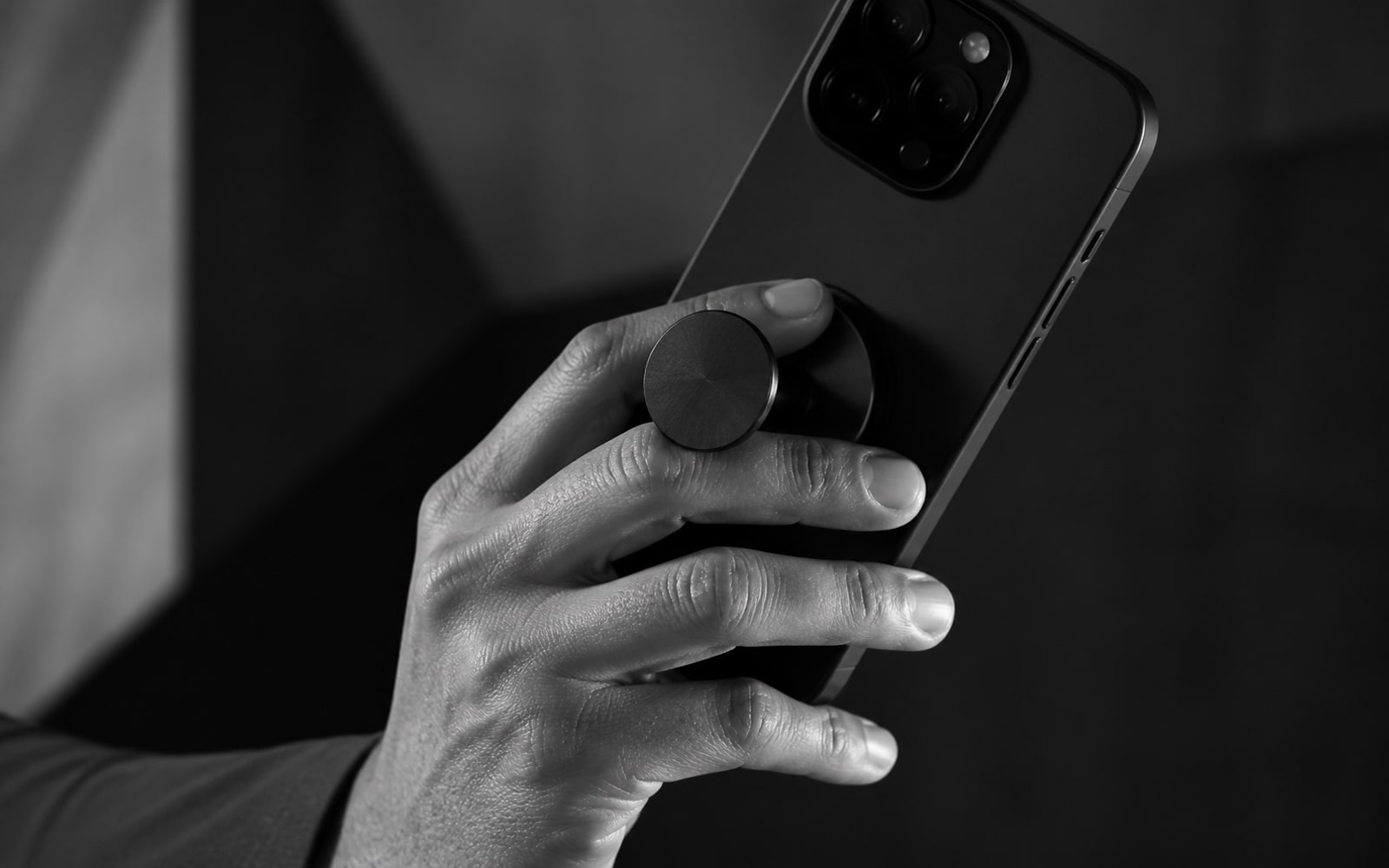
Measure
We scan a retail device, then verify button travel, camera clearance, speaker openings, and wireless-coil position by hand.
Our story
Built to survive our own pockets, not just the display case. From device scans and material batches to the drop tests that decide what actually reaches the shelf.
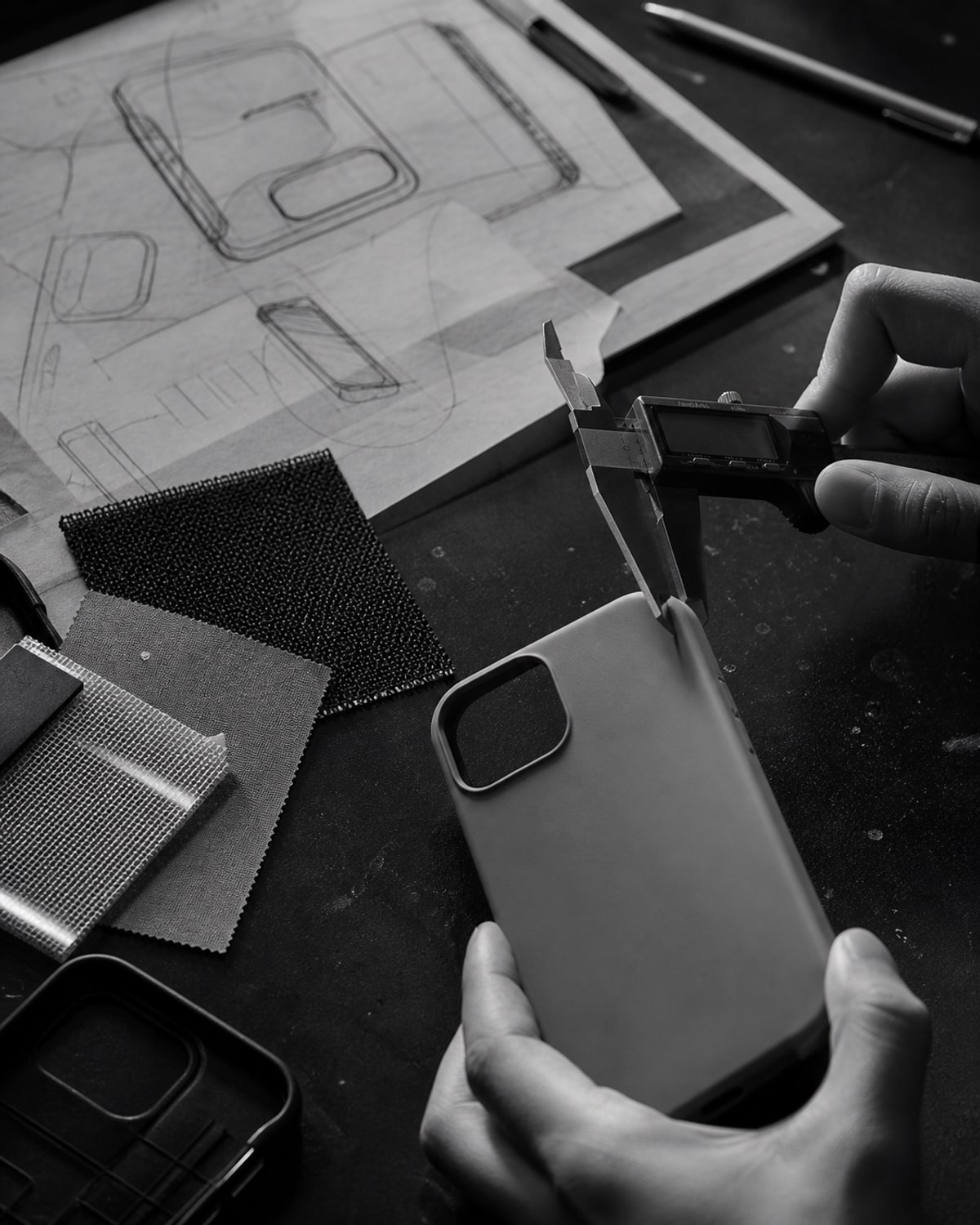
How we started
GRIPLINE began at a repair counter, where cases marked for the same phone left different gaps around the camera and side buttons. We started measuring retail devices with a structured-light scanner, then cut a separate fit file for every model instead of scaling one outline up or down.
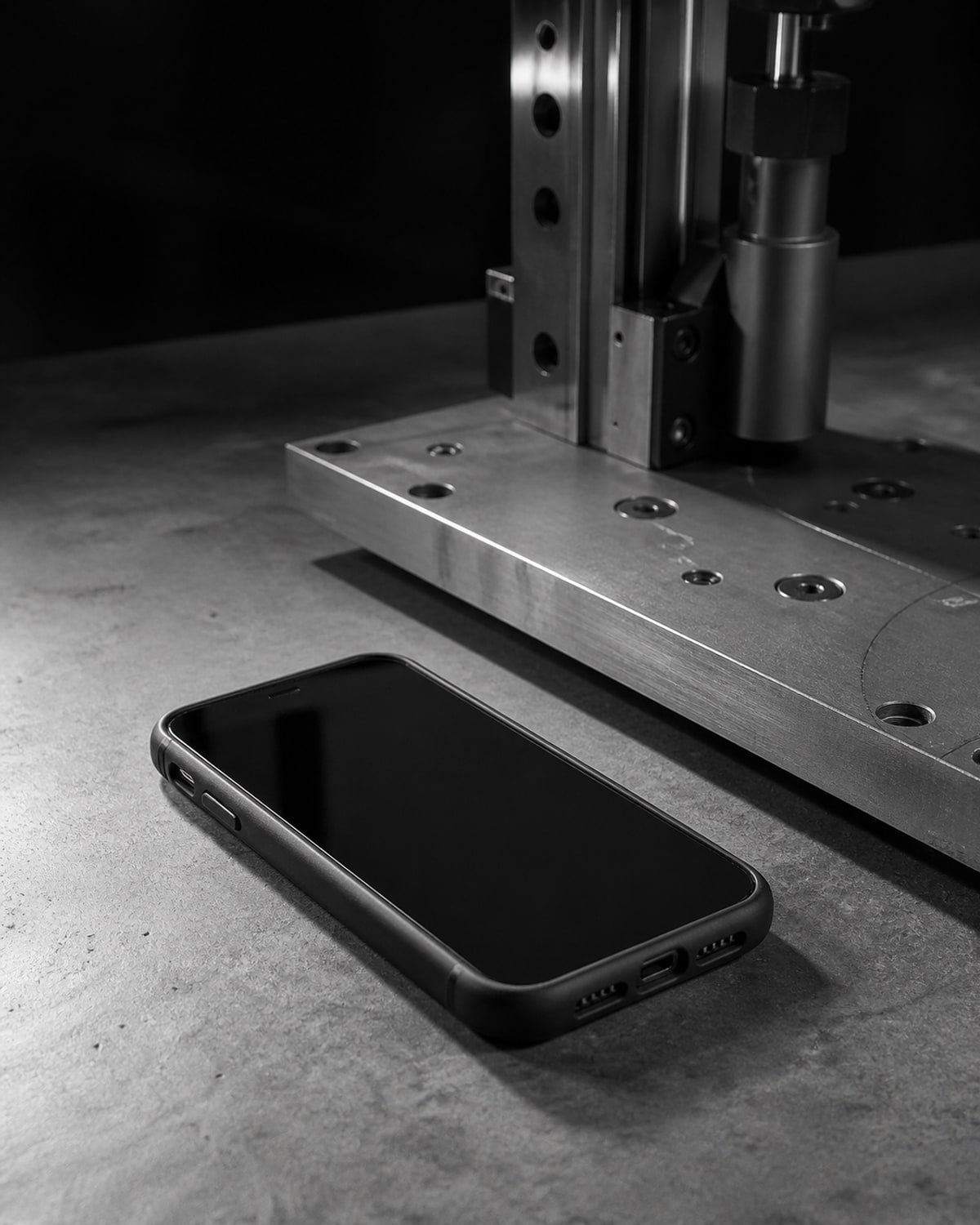
The standard
A case spends fourteen days in pockets with keys, transit cards, and lint before approval. Cable samples run through a 20,000-cycle bend rig at the connector. We log yellowing, loose hinges, hot spots, and button drag; a failed note sends the sample back to the supplier with a marked-up part drawing.
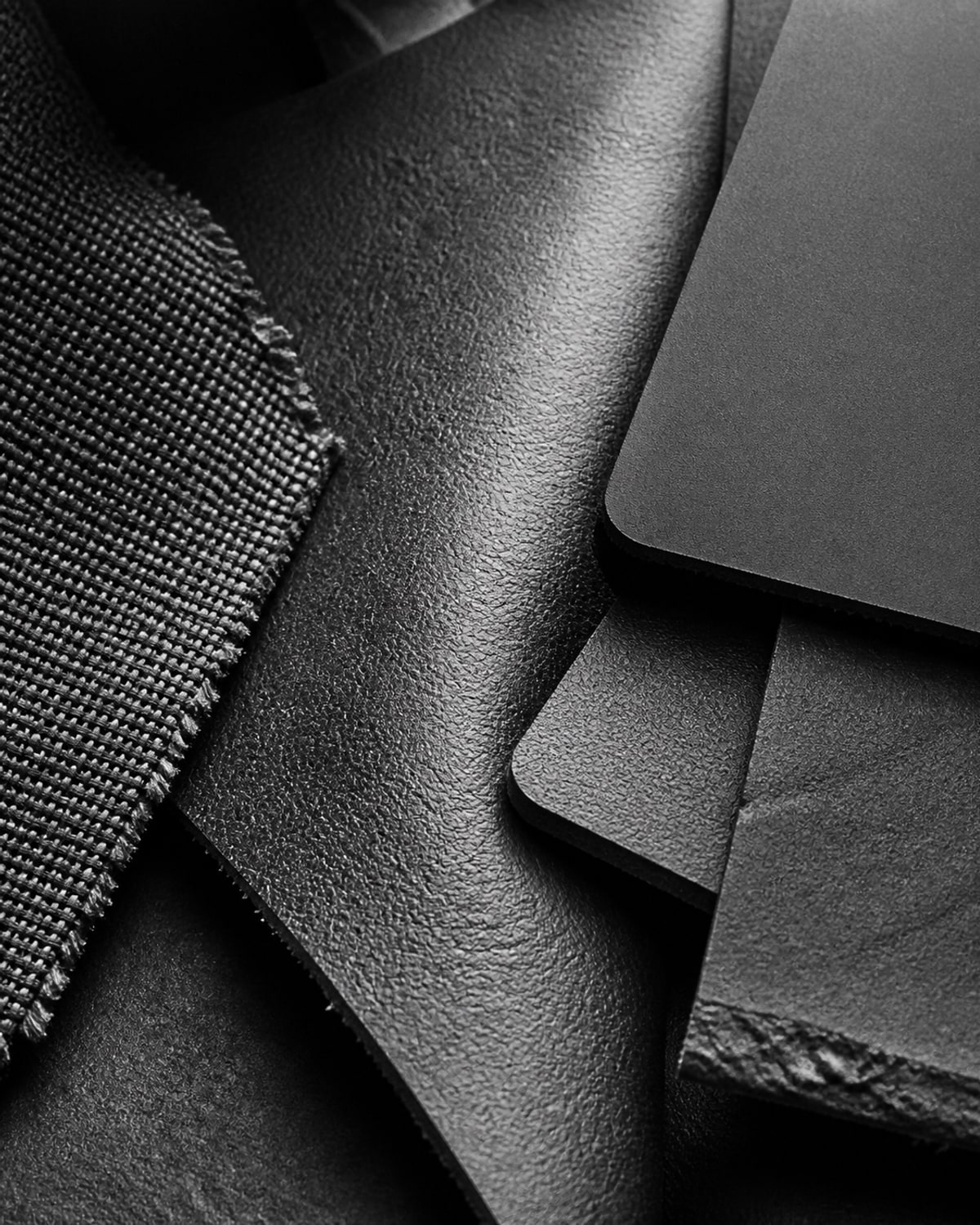
The materials
Our leather comes from a small Tuscan tannery that uses vegetable tannins and publishes hide traceability by batch. Canvas is solution-dyed before weaving, so worn corners reveal the same color instead of a pale core. For clear cases, we specify UV stabilizers and reject resin lots that shift beyond our color limit after accelerated light testing.
From sample to shelf
We scan a retail device, then verify button travel, camera clearance, speaker openings, and wireless-coil position by hand.
Two tool samples are fitted on separate devices. We record edge lift, magnet alignment, cable temperature, and one-hand reach.
Cases take 26 controlled drops. Cables complete 20,000 bends. Pouches are loaded for seven days to check seam creep and strap slip.
Production units are checked against the approved sample. If the resin, textile, or hardware lot changes, fit and finish testing starts again.
Working principles
Product pages state the polymer, textile, metal, coating, and care method. ‘Premium material’ is not a specification.
A new phone model gets its own measurement file and physical sample. We do not reuse last year's camera or button geometry.
Screwed hinges and replaceable adhesive pads are preferred where the part allows it. Wear parts should not turn the whole product into waste.
“We stopped asking if a case looked good in photos and started asking if it survived a real pocket for two weeks.”
- GRIPLINE product team